
What Kenya’s Data Protection Act Means for Your Visitor Records
2026-09-12
Visitor and vehicle records contain personal data: full names, ID numbers, phone numbers, and sometimes photos. Under Kenya’s Data Protection Act 2019, that makes the way you collect, store, and share visitor information a compliance matter, not just an operational one. This article breaks down the principles that apply and what to check before choosing a visitor management system.
Three principles that apply to gate and reception data
Data minimisation means only collecting what you actually need for the visit. A gate process that asks for more information than necessary — for example, requiring a full national ID scan for a short courier drop-off — is collecting more data than the purpose requires.
Purpose limitation means using visitor data only for the reason it was collected, such as security and host notification, not for unrelated marketing or profiling. If visitor data is ever repurposed beyond the original reason for collecting it, that raises a compliance question.
Access control means restricting who within your organisation can view visitor records. This is where most paper-based processes fall short, since a logbook left open at reception can typically be read by anyone standing at the desk.
Where a visible paper logbook falls short
A visible paper logbook at reception struggles with all three principles above. Every visitor can read the names, ID numbers, and phone numbers of everyone who signed in before them, which is difficult to reconcile with access control expectations. There is also no way to restrict who within the organisation can flip through past pages, and no audit trail of who accessed the book and when.
Questions to ask a visitor management vendor
When evaluating a digital visitor management system, ask specifically how visitor data is stored, who can access it, and whether access is role-based. Ask whether data is encrypted, whether the vendor is a registered data controller or processor, and what happens to visitor data if you cancel the service.
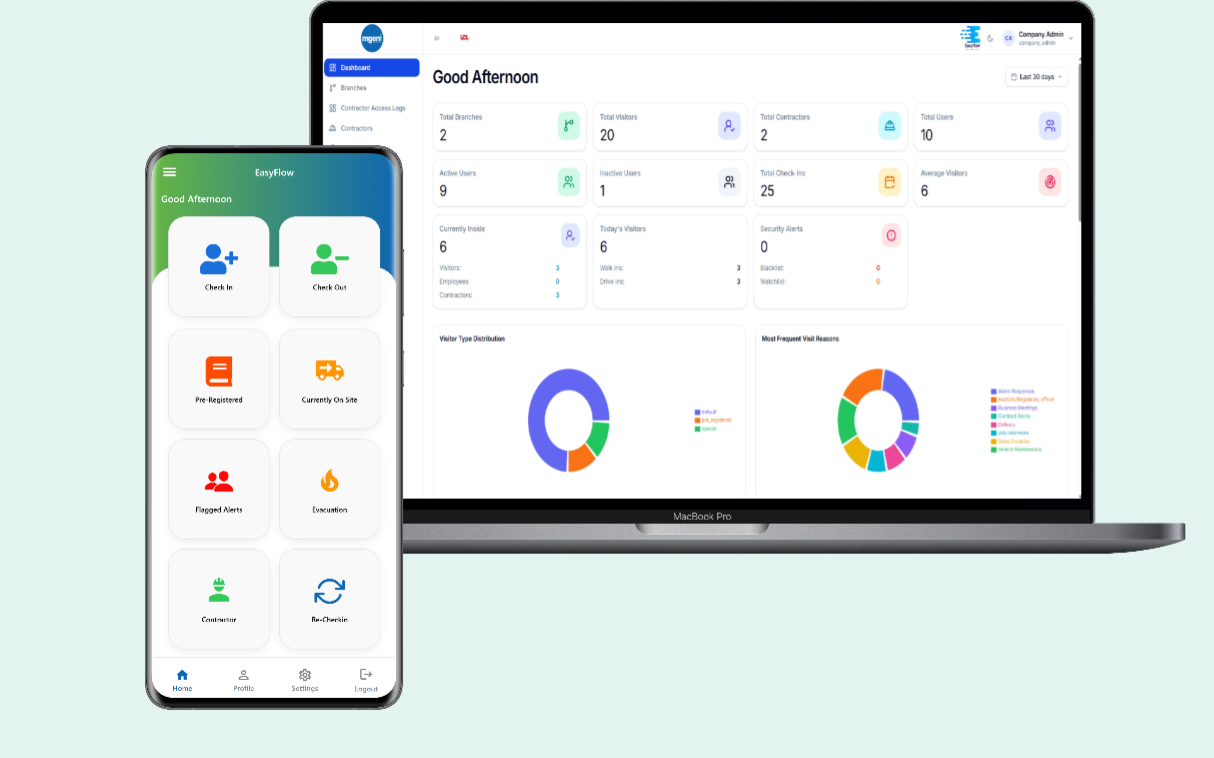
Mgeni VMS was built with these questions in mind, storing visitor and vehicle data securely with access controlled by role, rather than left open at the front desk. Different staff levels can be given different levels of visibility into visitor records, so a security guard at the gate and a facilities manager reviewing monthly reports see only what their role requires.
This is guidance, not legal advice
This article is not a substitute for legal advice — organisations handling significant volumes of personal data, or operating in regulated sectors, should still consult a data protection professional about their specific obligations under the Act. But the general direction is clear: a controlled digital process is easier to defend during a compliance review than an open paper one, and it is worth treating your visitor sign-in process as a data protection decision, not just an operational one.