
Paper Logbook vs Digital Visitor Management: What Changes at the Gate
2026-09-05
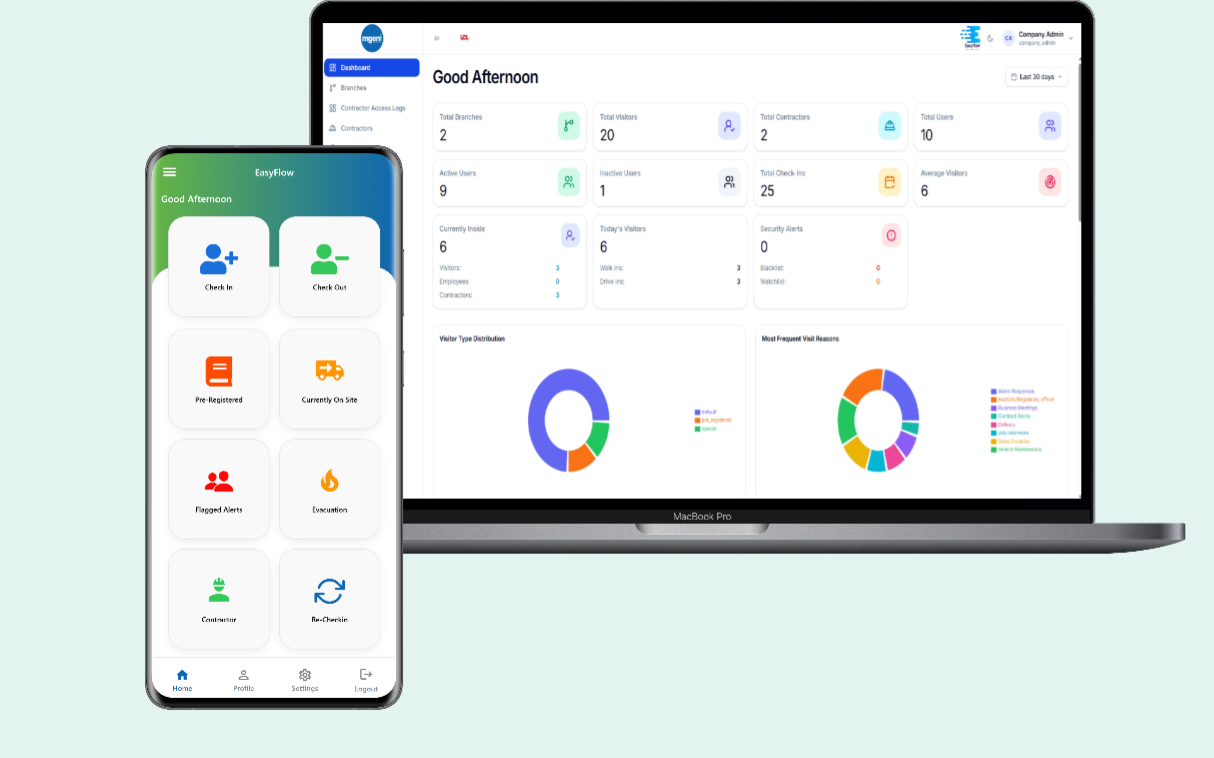
A paper logbook feels simple because it requires no setup. In practice, it creates problems that only show up when you need the records most: during a security incident, a compliance audit, or a busy period at the gate. This article walks through exactly what changes, function by function, when a business in Kenya moves from a paper visitor book to a digital visitor management system.
Speed at the gate
A digital visitor management system like Mgeni VMS lets a visitor register in under a minute, with the option to pre-register before they arrive. A paper logbook depends entirely on how quickly a guard can write legibly, and queues build up fast when several vehicles or visitors arrive together, particularly at shift change or during morning meeting hours.
This matters more than it sounds. Every minute a visitor spends waiting at the gate is a minute your security team is not watching the rest of the perimeter, and it is also the first impression your organisation makes on a client, auditor, or partner arriving on site.
Finding records when you need them
Finding a specific visitor from three weeks ago in a paper logbook means flipping through pages by hand, hoping the handwriting is legible and the entry was filled in correctly. A digital system returns the same record in seconds, filtered by name, date, host, vehicle registration, or purpose of visit.
This becomes critical during an incident investigation. If something goes missing, or an unauthorised person is found on site, being able to pull an exact, time-stamped list of everyone who entered a specific area on a specific day is the difference between resolving the issue in minutes and spending hours cross-referencing handwritten pages.
Data protection and compliance
Kenya’s Data Protection Act 2019 requires organisations to control access to personal data and be able to account for how it is used. A paper logbook sitting openly at reception, visible to every visitor who signs it, does not meet that standard. Anyone waiting at the front desk can read the full names, ID numbers, and phone numbers of everyone who checked in before them.
A digital system with role-based access changes this. Visitor data is stored securely, and only staff with the appropriate permission level can view or export it, which is a meaningfully stronger position to be in if a data protection question ever comes up.
What paper still does reasonably well
None of this means paper is unusable. Very small sites with low visitor volume can run on a logbook for years without incident, and the upfront cost of a logbook is close to zero. The gap only becomes obvious once a business needs to answer a specific question quickly — "who was on site at 3pm on the 12th," or needs to demonstrate to an auditor how visitor data is protected — and finds that a paper process simply cannot produce that answer on demand.
Making the switch
Moving from paper to digital does not have to be a large project. Most sites start with walk-in visitor registration at a single gate or reception point, then add pre-registration, vehicle logging, and multi-branch reporting as the team gets comfortable with the new process. Mgeni VMS is built to support that gradual rollout, starting from a single-branch Basic plan and scaling up as needs grow.